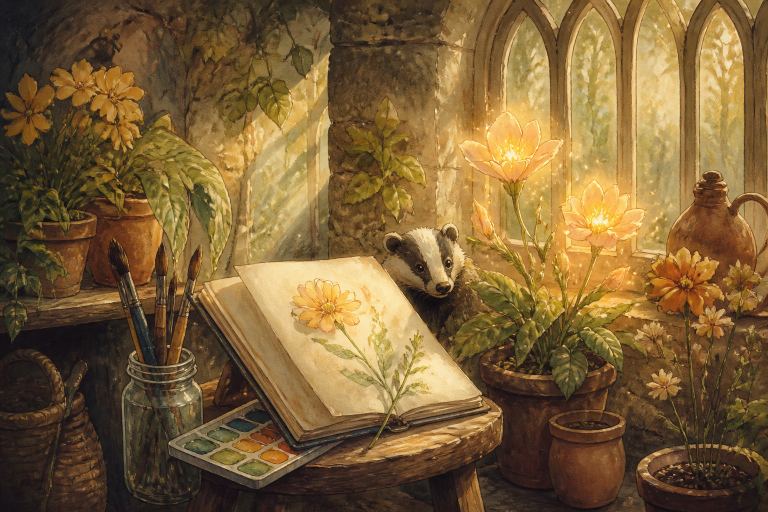
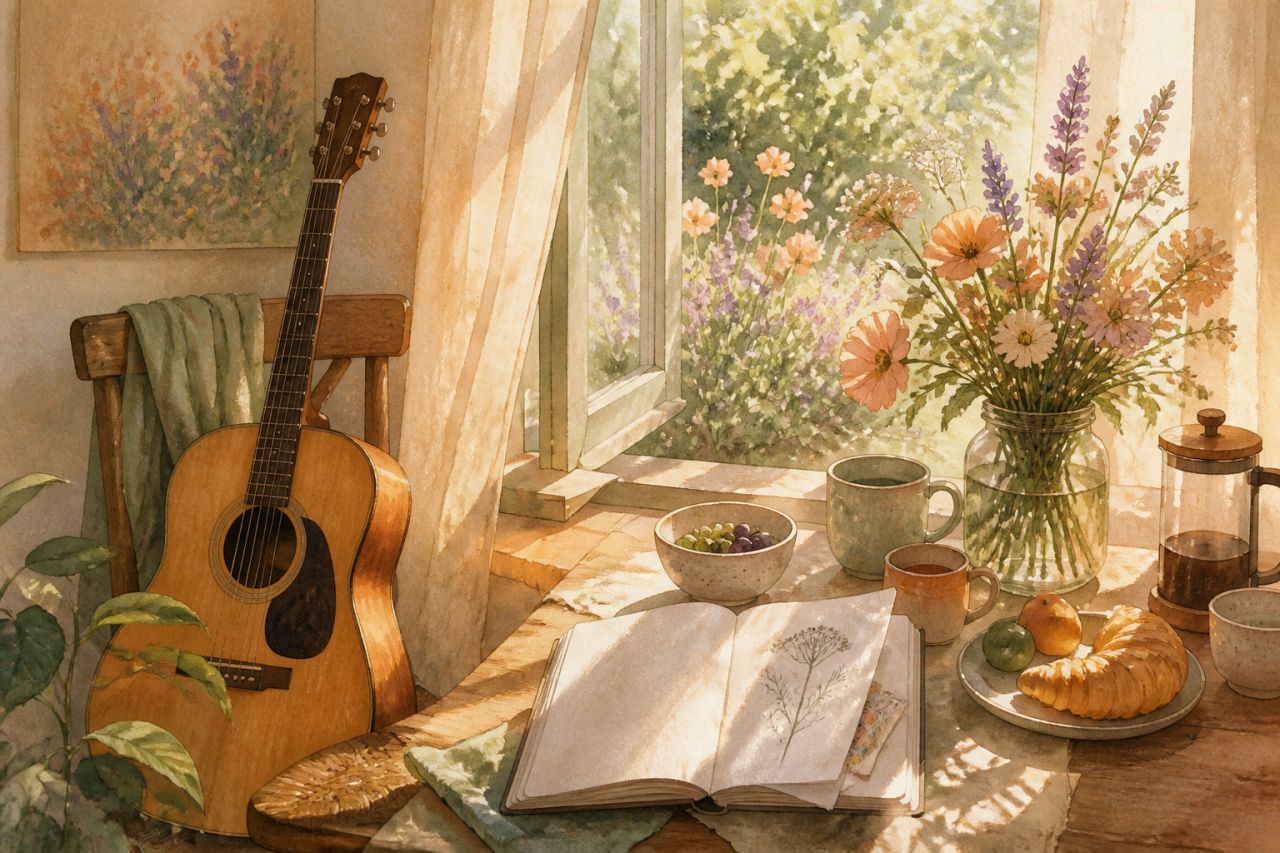
They weren't the first to say "I love you". But they noticed you always hum the same song, and played it for you on the guitar on your birthday. They kept the ticket from your first concert in a notebook, sketched your profile in the margin of a book, and they know exactly which light you like best on a Sunday morning. If that sounds familiar, you may be sharing your life with an ISFP. Or you may be one.
In the 16 personality types test, the ISFP is called the Artist: Introverted, Sensing, Feeling, Perceiving (if those four letters mean nothing to you, our guide to the 16 types explains them). People often describe this type as quiet, even hard to pin down. In love, the Artist is above all deeply thoughtful, and loves in the present moment, with all their senses.
Don't know your type yet? Take the 16 personality types test: 80 questions, about ten minutes, free.
How the ISFP loves: gestures rather than speeches
The Artist rarely talks about their feelings. Not because they don't have any: they have plenty, and very intense ones. But words often feel too small, or too solemn. So they show it instead. A meal cooked exactly the way you like it, a playlist made for you, a spontaneous walk to a place they found beautiful and wanted to share: for an ISFP, each of these is a declaration.
Their love goes through the senses and through the moment. They notice details others miss: the colour of a jumper you often wear, the way you laugh when you're embarrassed. And they live the relationship in the present: they'd rather have a perfect evening today than a grand five-year plan.
The ISFP forms deep attachments, but at their own pace. They need to feel they can be themselves, without a mask, before they truly open up. Once past that point, their loyalty and tenderness are rare.
What they need from a relationship
The Artist isn't looking for a relationship that's perfect on paper. They're looking for a real one. What matters to them:
- Authenticity. They have a very sensitive radar for anything fake. They'd rather be with someone imperfect but sincere than someone flawless who's playing a part.
- Freedom. They need space for their passions, their time alone and their sudden urges. A relationship that locks them into a schedule or rigid expectations suffocates them.
- Respect for their values. Their convictions are quiet but deep. They don't impose them, and they expect them not to be trampled on.
- Gentleness. Heated conflict, harsh criticism and tense atmospheres hurt them more than people think. They flourish in a kind, caring climate.
In return, they offer a warm and attentive presence, a unique way of making everyday life more beautiful, and a love that doesn't ask the other person to change.
Where they stumble in love
No type is easy to live with in every way, and the Artist has their blind spots.
They avoid conflict
When something bothers them, the ISFP tends to stay quiet to keep the peace. They absorb it, let it go, until the day it all spills over. Their partner then discovers weeks of built-up unease without having seen it coming.
They withdraw when they feel judged
Criticism, even minor, can cut deep, especially if it targets what they love or what they create. Their reaction is rarely an argument: they close up and pull away, and the other person feels they've lost touch without understanding why.
They find it hard to say what they need
The Artist often hopes their partner will guess. They give a lot of attention and silently wait for the same in return, in the same way. When it doesn't come, they feel misunderstood, even though they never actually asked.
Long-term plans make them uneasy
Talking about moving house, a ten-year budget or joint career plans can make them uncomfortable. It isn't a lack of commitment: they simply feel more at ease in the concrete here and now than in the abstraction of the future.
Who does the ISFP get along with best?
Any two types can build a strong relationship: compatibility depends mostly on how two people communicate and handle their differences. We cover this in detail in our article on relationship compatibility. Some pairings do start with an advantage, though.
- With the INFP, the Storyteller: the same sensitivity and the same love of creativity and self-expression. They often understand each other without words, and respect each other's need for space.
- With the ENFP, the Inspirer: the ENFP's energy and enthusiasm draw the Artist out of their bubble, while the ISFP brings a calming presence and a grounding in the here and now.
- With the ISFJ, the Keeper: a caring, steady partner who creates a safe, warm setting where the Artist can flourish without feeling judged.
With more directive or highly critical types, the relationship takes more effort: the Artist may feel boxed in. But when the other person learns to give them room, these couples often find a lovely balance between structure and spontaneity.
Dating an ISFP: 3 tips
- Notice their gestures. When they prepare something for you, they put part of themselves into it. Telling them ("I loved that you thought of that song") means far more to them than a big speech.
- Criticise gently, and in private. Talk about a specific behaviour, never about who they are. And start with what's going well: they'll hear the rest much better.
- Give them space without worrying. An afternoon alone drawing, walking or playing music isn't them pulling away. It's how they recharge, and they'll come back more present.
Are you an ISFP? 3 ideas for your relationship
- Say what bothers you while it's still small. "That hurt me a little yesterday" now avoids an explosion three weeks later. Your need for harmony is easier to protect when you speak up early.
- Put your needs into words. Your partner can't read your mind, even if they love you. Saying "I'd love an evening with just the two of us" isn't selfish.
- Allow yourself to look ahead a little. You don't need a ten-year plan, but sharing a wish for next summer reassures your partner and shows you're committed, in your own way.
To go further, the full ISFP profile page covers their strengths, challenges and way of working, and the Improvisers family page compares them with the three types most like them. You can also read ISFP at work, or discover a closely related type in love in INFP in love.
Frequently asked questions
Are ISFPs romantic?
Yes, in their own way. They rarely make grand declarations, but they excel at personal touches: a handmade gift, an outing planned just for you, a simple moment made perfect. Their romance is sensory and spontaneous.
How can you tell if an ISFP is in love?
They bring you into their world. They show you what they create, take you to their favourite places, share their music and let you see them as they are, unfiltered. For such a private type, letting someone into their inner world is a very strong sign.
Which type is the best match for an ISFP?
Types that share their sensitivity or respect their need for freedom, such as the INFP, ENFP or ISFJ, often get along with them naturally. But any couple can work: communication matters more than the letters of your type.
Why does an ISFP pull away?
Most often because they feel judged or pushed, or because they need to recharge. The withdrawal usually isn't rejection. Giving them a little time, then offering to talk calmly, without blame, helps them come back.
What's your type?
A type describes tendencies, not a whole person: it's a tool for understanding yourself and others better, not a label. To find out whether you're an Artist, or discover your partner's type:
Take the 16 personality types test, then compare your results.
 Profile · SP ImprovisersISFP · The ArtistRead the full portrait →